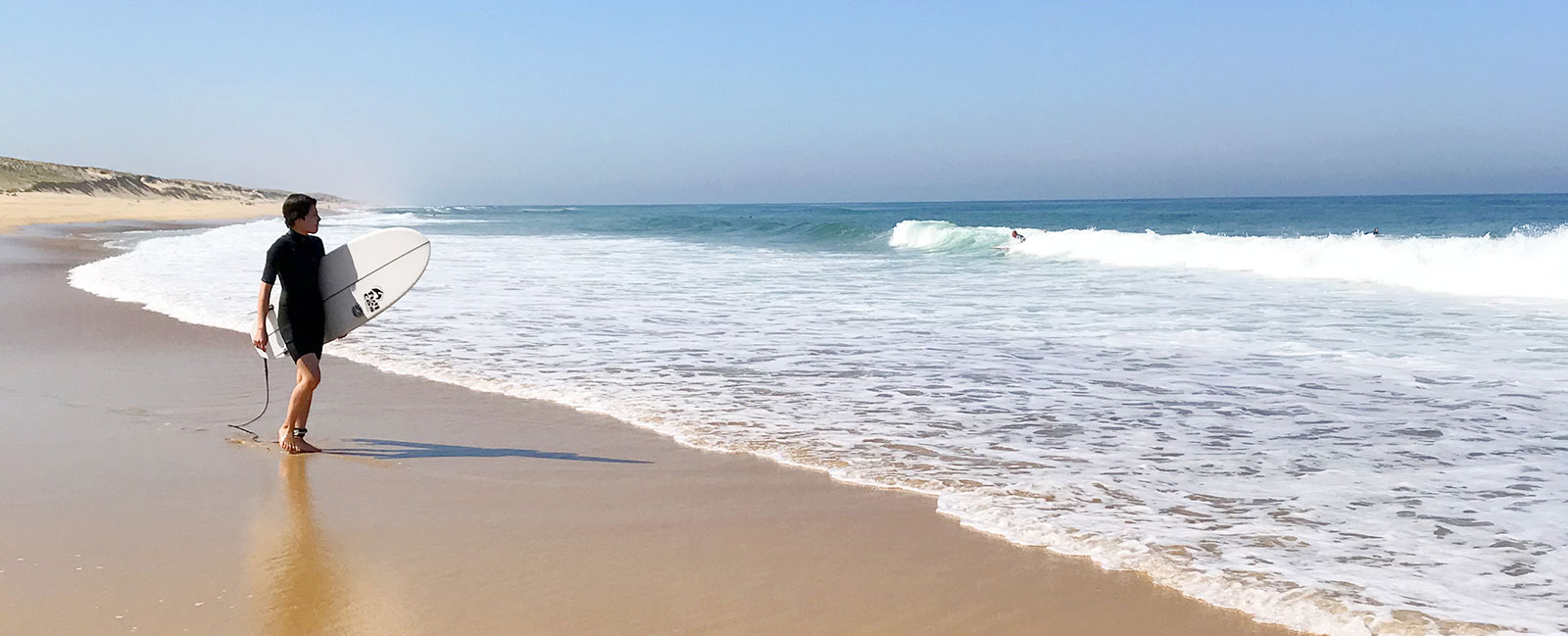
Surfing and diabetes
Teiva was not an athletic child before his diabetes, but he loved to draw, was a diligent student and took piano lessons.
At the age of 10, the discovery of her type 1 diabetes meant that we didn’t have to make any special adjustments to her extracurricular activities. His transition to the sixth form with his new diabetes was an opportunity for him to assert his character: first he asked to join the middle school Jazz class… Then he asked us to enroll him in the surf school!
This announcement was a source of both joy and anguish…

Surfing is a super-demanding sport!
Stay in water between 16 and 21 degrees for 1? hours, and up to 3 hours on the best days. Row against the current to reach the peak (where the vaguents offer surfing conditions). Ducking (plunging the front of the board underwater to pass under the rollers and keep moving towards the peak).
Row hard to gain speed so you can stand up and ride the wave! Then fall in, paddle, position yourself, wait in the cold water, fight against the currents and leap to your feet, keep your balance and follow the wave, have fun with its speed, its size… Surfing gives you a feeling of well-being in symbiosis with the ocean, it’s a bit magical.
It’s also very energy-intensive! And surfing requires muscle tone and endurance.
Surfing with diabetes
The impact on his curves is the same for each session: a large, slow drop in his blood sugar levels. He adapts his meal and allows himself a slight hyperglycemia, having recognized that the drop is inevitable.

Our biggest fear was that he might experience hypoglycemia out at sea, since getting out of the water also takes energy. He leaves his blood-sugar monitoring equipment on the beach, facing the break, and—most importantly—some snacks to raise his blood sugar! The slow drop in his blood sugar has always allowed him to plan when to get out of the water to check his levels or replenish his glucose… He sometimes slips a packet of glucose gel into the sleeve of his wetsuit to avoid a critical situation, but he’s never had to use it. The rule is to never go surfing alone.
Gliding without forgetting diabetes
Surfing has given Teiva a new lease of life. Diabetes has transformed his life, and sometimes we think it’s diabetes that has pushed him to surpass himself, to go even further out of his comfort zone, which had been shaken by his disease management.
Winter sometimes makes surfing too complicated (huge waves and bitter cold), so he’s taken up skateboarding to keep the energy flowing! Carver ou street l’important est de glisser!
And above all, gliding is now part of his equilibrium!