
Diabetes Target Values
Target blood glucose levels are not just numbers. They require a great deal of discipline
.
Understanding and Analyzing the Numbers
For type 1 diabetes, blood glucose target ranges vary depending on medical recommendations related to age, weight, and sometimes specific life stages. Only you and your healthcare provider can determine your specific target ranges.
Target values are numbers, but let’s not forget that they also represent the goal of well-being—well-being as it is felt and experienced. Sensitivity varies from person to person and is linked to individual needs, but the generally accepted targets are:
• Before meals: between 80 and 130 milligrams per deciliter of blood (mg/dl)
• Postprandial (two hours after meals): less than 180 mg/dl
• At bedtime: between 90 and 150 mg/dl
When the target level is exceeded, this is called hyperglycemia.
In cases of prolonged hyperglycemia, be aware of acetone. Here’s an explanation of the phenomenon.
For hyperglycemia (high blood glucose levels), the standard threshold is generally considered to be above 180 mg/dl. Prolonged hyperglycemia requires monitoring for ketones.
The characteristics associated withdiabetic ketoacidosis generally include high blood glucose levels and increased acidity in the blood, as measured by blood pH and ketone body concentration. Ketoacidosis is characterized by an excessive buildup of acids in the blood.
The body then begins to break down fat to produce energy, leading to the formation of ketone bodies. Ketone bodies poison the blood. Blood sugar levels must be corrected immediately.
Below 70 mg/dl: definition
Hypoglycemia is a reading below the lower limit of the target range.
Hypoglycemia (low blood glucose) is generally defined as a blood glucose level below 70 mg/dl. However, it is possible to experience symptoms of hypoglycemia at slightly higher levels.
It is important to trust your symptoms and check your blood sugar level using blood glucose sensors (interstitial measurement) or fingerstick meters (using a drop of blood from your fingertip). When blood sugar levels fluctuate rapidly—whether rising or falling—the test result may not be representative or may not even be available.
The measurement will then need to be repeated. Continuous glucose monitors such as Freestyle or Dexcom use an upward, horizontal, or downward arrow to indicate the trend in glucose levels.
This information is invaluable for adjusting the necessary correction. A fingerstick test can sometimes confirm a blood glucose reading. Clearing up any doubt can be reassuring. Rapid fluctuations cause physical discomfort as well as mental distress. Decisions to take a snack or adjust insulin to restore stability are urgent and important. .
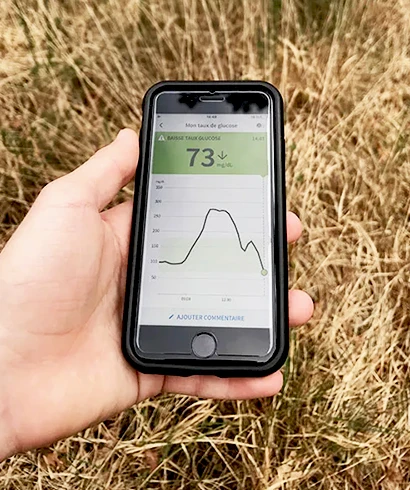
The rate at which blood sugar levels drop affects how you feel...
A rapid change is usually clearly felt by the person experiencing it. A slow drop, on the other hand, may not be detected until blood sugar levels have already become very low. This is because the brain compensates for the slow drop in blood sugar by adjusting the body’s responses. Vision, muscle tone…Sometimes, very low blood sugar levels can catch us by surprise. Early on in our journey with diabetes, when the capillary test showed a very low reading of 30 mg per deciliter of blood, we thought the blood glucose meter was broken! I then explained to the pharmacist that I needed a new measuring device.
The HI and LOW extreme readings.
Since then, we have encountered the term “LOW,” which means “low” in English and indicates a blood glucose level below 0.30 mg/dL, as well as “HI,” which stands for “high” and indicates a blood glucose level above 4 mg/dL.
Trusting yourself and listening to your body never means you shouldn’t check your blood sugar.


